
Alfred Marshall and Modern Economic Theory
At the core of Marshall’s legacy lies his magnum opus, Principles of Economics (1890), a seminal work that has enlightened and motivated numerous generations of intellectuals. Departing from abstract mathematical formulations, Marshall’s scholarly pursuits were deeply rooted in unraveling the complexities of real-world market dynamics, delving into the intricacies of price mechanisms and elucidating the transformative impact of financial decisions on societal welfare.
Introduction of Economics: Basic Economics and Meaning, Scope, and Importance

The Foundation of Modern Economics Theory:
For Marshall, wealth accumulation served as a means to meet human needs rather than an end goal in itself. He advocated for financial systems to prioritize enhancing people’s quality of life above all else.
His practical insights were closely tied to societal advancement, as he consistently stressed the importance of economic growth benefiting the welfare of the populace beyond mere production and profits.
Evolution of Economic Theory
His seminal publication, “Principles of Economics” (1890), revolutionized the field of economics and shaped the minds of countless academics. Within this influential piece, he presented fundamental ideas such as supply and demand curves, price elasticity, and consumer surplus, all of which continue to underpin contemporary economic thought.

Theory of Demand
Marshall made a significant impact through his examination of demand, highlighting the crucial role of price in influencing consumers’ willingness to purchase a product. According to his analysis, a decrease in price typically leads to an increase in demand, while an increase in price results in a decrease in demand.
He is credited with introducing the law of demand, which articulates the inverse relationship between price and quantity demanded under constant conditions. Marshall also delved into the concept of price elasticity of demand, which gauges the extent to which consumers adjust their buying behavior in response to price fluctuations.

The elasticity of demand can range from elastic, where a slight price increase significantly reduces demand, to inelastic, where demand remains relatively unchanged. This framework continues to shape the decisions of businesses and policymakers in setting prices effectively.
Theory of Supply
Marshall delved into the examination of producers’ behavior in his supply theory. He contended that producers tend to increase their supply in response to rising prices as higher prices present more lucrative profit potentials.
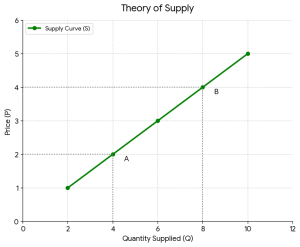
In Marshall’s perspective, production costs hold significant sway over supply levels. Variables like labor expenses, raw material prices, technological advancements, and operational efficiency impact firms’ production and sales capacities. Through his insights, Marshall shed light on how enterprises adapt to evolving market dynamics.
Price Elasticity: Understanding Consumer Behavior in Current Markets
Price Determination in Modern Economic Theory
One of Marshall’s most renowned contributions lies in his elucidation of price determination through the interplay of demand and supply. Drawing an analogy, he likened demand and supply to the two blades of a pair of scissors – just as both blades are indispensable for cutting paper, both demand and supply play crucial roles in setting market prices.
In scenarios where demand escalates but supply remains static, prices tend to increase. Conversely, if supply rises while demand stays constant, prices typically decline. The juncture at which demand and supply intersect is termed the equilibrium price, where the quantity demanded aligns with the quantity supplied.
This equilibrium concept has become a fundamental pillar of contemporary economic analysis and continues to be a staple in the teachings of economic theory across the globe.
In his view, the pursuit of wealth serves as a means to meet human needs rather than an end goal itself. According to him, financial systems should ultimately strive to enhance people’s quality of life.
His distinct perspective imbued his concepts with practicality and a strong link to societal advancement. Marshall consistently advocated for national policies that go beyond mere industrial output and business gains, emphasizing that economic progress should directly benefit the welfare of the populace.
Consumer Surplus
Further developed by Marshall, another significant idea is the concept of consumer surplus. This notion denotes the variance between the value a buyer is ready to shell out for a product and the actual price paid. To illustrate, if an individual is prepared to spend $100 on an item but acquires it for $70, the consumer surplus amounts to $30. Marshall leveraged this concept to gauge the advantages consumers gain from commercial deals. Additionally, it aided economists in assessing the impacts of levies, pricing strategies, and communal initiatives on the populace.
What is Production Possibility Frontier (PPF)?
Critical Examination:
Marshall’s analysis demonstrates that economic results can vary based on the time frame under consideration. He established the differentiation among the market period, short term, and long term.
During the market period, supply is commonly fixed, and prices are primarily affected by demand. In the short term, businesses can make adjustments to certain production factors, whereas in the long run, enterprises have the ability to significantly expand or contract their activities. This temporal assessment enhanced economists’ comprehension of market dynamics and production choices.
Conclusive Outcomes:
Alfred Marshall’s economic principles laid the groundwork for contemporary microeconomics and revolutionized the investigation of markets, pricing, and consumer conduct. His significant contributions, which include the laws of supply and demand, price flexibility, consumer surplus, and equilibrium examination, continue to be fundamental to economic theory in the present day. Marshall’s focus on both material wealth and human well-being broadened the scope of economics, providing a more comprehensive and practical viewpoint. Consequently, his concepts persist in molding economic analysis, corporate tactics, and governmental policies worldwide. His legacy endures as a substantial advancement in establishing economics as a scientific field.
References:

Siraj Ullah, an economics writer at Tech and Tips Economy, specializes in elucidating intricate economic concepts through concise data and tailored infographics for enhanced reader comprehension. Drawing on expertise in global macroeconomics and fiscal policy, his mission is to demystify international finance, making it more visual and approachable to a wider audience.