
Table of Contents
The significance of demand and supply in society and their impact on the economy are crucial aspects worth examining:
The global economy is heavily influenced by the intricate dynamics of demand and supply. These factors play a pivotal role in determining prices, production rates, job opportunities, and the accessibility of various goods and services. From basic necessities like food and clothing to cutting-edge technologies such as smartphones and electric vehicles, every product in the market is intricately linked to the interplay of demand and supply. In the absence of these fundamental drivers, an economy would struggle to operate cohesively and sustainably. It’s not just economists or entrepreneurs who should grasp the importance of demand and supply; these concepts are equally relevant to everyday individuals.
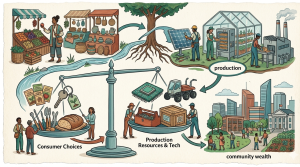
Critical Reasons It Rules the Global Economy:
A. Enabling equilibrium pricing in global consumer markets
B. Influencing resource distribution and corporate production on a worldwide scale
C. Shaping trade policies of governments and decisions on international investments
Concept of Demand and Supply
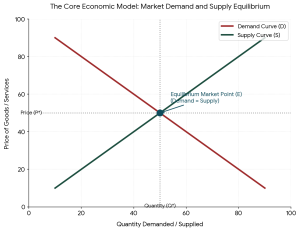
The interaction between supply and demand serves as the foundational structure influencing price variations and resource distribution in global markets. This essential economic process harmonizes consumer buying capacity with business output levels to uphold equilibrium across the international market landscape.
Demand:
The passage explains the notion of demand by highlighting its reflection of consumers’ readiness and financial ability to buy products at varying price points, based on actual buying power rather than mere desire. As per the demand law, increased prices naturally result in reduced purchases, while decreased prices encourage buying. This fluctuation in market demand is consistently impacted by changing household incomes, shifting personal preferences, and expectations regarding future market developments.
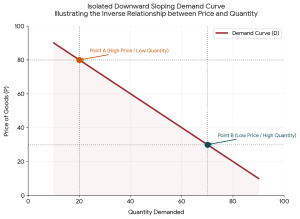
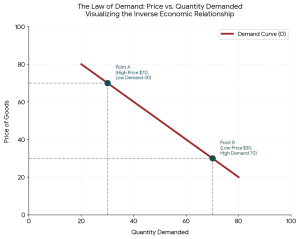
The interaction between demand and supply dynamics profoundly influences market consumption behaviors. When prices of products increase, demand naturally decreases, while price drops stimulate increased purchasing, under the condition that other factors remain unchanged. This essential pricing mechanism acts as a direct communication channel for manufacturers, assisting them in adjusting production levels precisely according to the continuously changing consumer demand.
Supply:
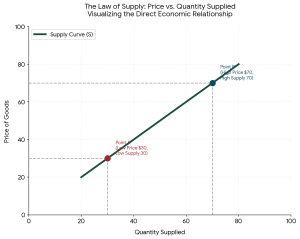
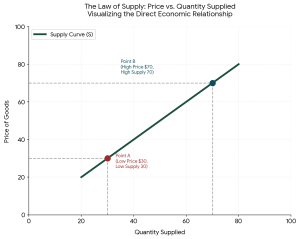
Manufacturers make decisions on the quantity of goods or services they supply to the market by analyzing various price points. In general, higher prices incentivize companies to increase production to optimize their profits, a principle referred to as the law of supply. Variables such as production expenses, technological progress, and governmental regulations play a role in determining the actual amount of goods delivered. The intricate balance of fixed costs, raw materials, technology, trade policies, and market rivalry significantly influences production levels. For instance, the integration of automation technology can escalate output even without price fluctuations. Understanding these intricate dynamics is crucial, as sudden shifts in production can disrupt the fragile balance between global supply and demand.
Effects of Market Scenarios on Pricing
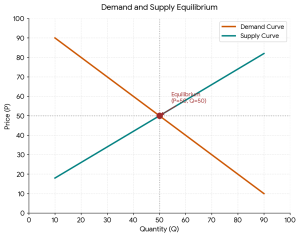
The interplay between supply and demand dictates the pricing of products and services in the market. This delicate balance is referred to as market equilibrium, where the amount demanded matches the amount supplied.
During equilibrium:
The pricing remains stable, ensuring equilibrium in the market with no excess or scarcity, indicating smooth operation of the market.
In situations where demand rises while supply remains unchanged, prices tend to go up as more buyers vie for limited goods. Conversely, if the supply increases but demand stays constant, prices decrease as sellers compete to attract buyers.
This equilibrium mechanism holds significant importance as it enables the economy to self-adjust without the need for continuous government interference.
The Impact of Supply and Demand in Everyday Life
Supply and demand have a direct impact on individuals’ daily routines in numerous ways. Although not always apparent, every purchasing decision is influenced by these factors.
1. The Determination of Prices:
The dynamic interplay between demand and supply plays a crucial role in shaping the prices of various commodities. Market conditions dictate the cost of essentials like vegetables, fuel, electricity, and transportation. For instance, a global reduction in fuel supply can drive prices up, irrespective of consistent demand levels.
2. Allocation of Products and Services:
At times, product unavailability can occur despite consumer demand due to limited supply. For instance, popular items may quickly run out of stock during peak seasons or promotional sales periods.
3. Influence of Consumer Preferences:
Consumer choices play a pivotal role in shaping demand, while supply adapts accordingly. Should there be a shift towards healthier dietary options, businesses respond by boosting the production of organic and nutritious goods.
4. Job Opportunities:
Increased demand for goods and services prompts companies to expand their operations, thereby generating more employment opportunities. Conversely, a decrease in demand may lead to production cutbacks and subsequent job losses.
5. Enhancement of Living Standards:
Well-functioning demand and supply mechanisms ensure the availability of goods at affordable rates, ultimately elevating the overall standard of living in society by making essential commodities accessible to a wider populace.
6. Significance of Demand and Supply:
Understanding the intricacies of demand and supply dynamics is paramount in navigating the complexities of modern economies and ensuring sustainable socio-economic growth.
The Significance of Demand and Supply Dynamics in Economics
Within the larger framework of economics, the interplay of demand and supply undertakes numerous crucial roles essential for the efficient functioning of the system.
1. Efficient Resource Allocation
The allocation of scarce resources such as labor, land, and capital is facilitated by the dynamics of demand and supply. Sectors witnessing high demand attract greater investments and resources, while those with lower demand experience contraction.
2. Maintenance of Price Stability and Market Efficiency
In a competitive market environment, the forces of demand and supply ensure that prices accurately reflect the prevailing economic conditions. This mechanism helps prevent artificial price distortions and fosters fairness in trade.
3. Encouragement of Production and Innovation
Increased demand for higher quality goods and services incentivizes producers to innovate. This, in turn, stimulates advancements in technology, enhances service delivery, and promotes the adoption of more efficient production methodologies.
4. Facilitation of Economic Growth
A harmonious interplay between demand and supply acts as a catalyst for economic growth. As demand rises, production levels escalate, resulting in augmented income, increased employment opportunities, and an overall expansion of the economy.
5. Managing Inflation and Deflation
Discrepancies in the equilibrium between demand and supply can lead to inflation (escalating prices) or deflation (declining prices). To maintain stability, governments and central banks closely monitor these fluctuations and adjust policies accordingly.
Government Role in Demand and Supply
Governments frequently step in to regulate significant fluctuations in demand and supply within actual economies. For instance, in times of inflation, authorities might mitigate demand by raising taxes or interest rates. Conversely, in situations of scarcity, they might bolster supply through imports or subsidies to producers. Price regulations, subsidies, and trade policies form part of the usual arsenal employed by governments to maintain market stability and shield consumers from abrupt price fluctuations.
A Classic Illustration
In the realm of economics, the interplay between supply and demand is a fundamental concept that influences various markets. A classic illustration of this dynamic can be observed in the housing sector. As urban populations swell, the demand for housing naturally escalates. However, if construction fails to keep pace with this demand surge, housing costs soar. Conversely, an oversupply of houses coupled with low demand drives prices down, placing builders in a precarious financial position. Similarly, the impact of supply and demand is evident in the realm of seasonal fruits. During peak seasons, fruit abundance leads to price decreases. Conversely, when fruits are out of season, their scarcity drives prices upwards.
Price Elasticity: Understanding Consumer Behavior in Current Markets
Interaction Between Demand and Supply
| Market Scenario | Impact on Price | Real-World example |
|---|---|---|
| High Demand + Low Supply | Price Rises | Seasonal fruits when out of season |
| Low Demand + High Supply | Price Falls | High production of fruits in peak season |
| Balanced Demand & Supply | Price Stabilizes | Market Equilibrium (Stable prices) |
Final Thoughts
Supply and demand form the core foundation of any economic system, governing production levels, pricing strategies, and market dynamics. These fundamental principles wield immense influence over not just commercial enterprises, but also the everyday experiences of individuals. From the availability of essential goods to the sustainability of job markets, the delicate equilibrium between supply and demand intricately links various facets of our lives. Profound comprehension of these principles empowers individuals to make informed choices and enables policymakers to foster resilient and robust economies. In essence, supply and demand transcend theoretical constructs, manifesting as tangible forces that mold contemporary societies and underpin the well-being of global populations.
References
Investopedia:Law of Supply and Demand

As an economics writer at Tech and Tips Economy, Siraj Ullah focuses on demystifying economic policies and financial data. His primary goal is to ensure that general economic topics are clear and easy to understand for the everyday reader. By adjusting the depth and length of his articles based on topic complexity, Siraj works tirelessly to bring approachable economic insights directly to his audience.
good articale